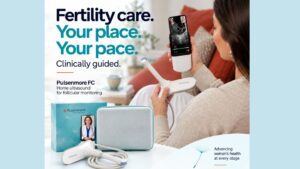









We’re pleased to share key milestones as we expand access to connected, home-based ultrasound care worldwide.
From milestone to momentum
Following Pulsenmore’s FDA Clearance and Nasdaq Listing, we are moving into a new phase, from milestone to momentum. We are seeing growing commercial adoption across Maternal-Fetal Medicine practices and hospitals and the common thread is not size. It is mindset. There is a clear understanding that hybrid care is not optional, it is a capability that must be built. Practices are beginning to train the muscle of remote care, integrating at-home ultrasound into clinical workflows, whether starting small or scaling more broadly
👉 Because starting is what makes the difference.
Clinical evidence is expanding the paradigm
At SMFM Las Vegas, new RCT data demonstrated that home ultrasound can go beyond monitoring.
Using visual biofeedback for pre-labor training, the study showed:
- Shorter second stage of labor
- Improved delivery outcomes
- Meaningful psychological benefits
This signals a shift toward more active, patient-engaged care.
👉 Read more about it here.

Dr. Natav Hendin – OB-GYN at Rabin medical center – SMFM 2026
Care delivery is evolving
At Sheba Medical Center, even during wartime, women with high-risk pregnancy complications, including preeclampsia and fetal growth restriction, are not confined to hospital beds. They are at home, managed through hybrid care models that include home ultrasound.
Sheba’s telemedicine activity has grown to 11.5% in 2025, representing a deeper shift in how care is delivered, measured, and experienced. A transformation driven by teams who chose to rethink what’s possible.
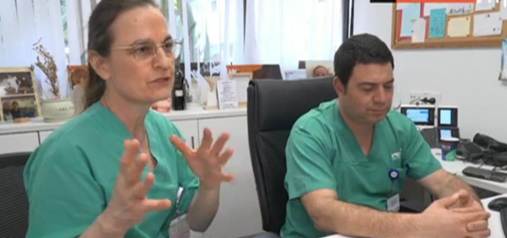
Dr. Avi (Abraham) Tsur, MD & Ms. Esti Geller, Midwife
Sheba Medical Center, Tel Hashomer
System pressure is driving change
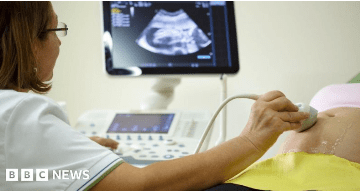
A recent BBC article highlights a challenge the NHS can no longer ignore:
In the U.K., nearly 1 in 4 sonographer roles remain unfilled, even as demand for ultrasound continues to grow. This is not just a workforce issue, it is a bottleneck in care delivery.
Rethinking traditional care pathways toward hybrid models could be a meaningful part of the solution. Those who start early will be better positioned to build the right capabilities and lead the change.
👉 Read the full article here.
Global engagement, consistent signal
Across SMFM in the U.S., PSANZ in Australia, NJEF, MedInTechs in Paris, and BMFMS in the U.K., our team presented, pitched, and led conversations with clinicians and healthcare leaders.
Our work was also recognized on stage, with our study poster winning Highest Scoring Poster in Maternal Medicine at BMFMS, and Pulsenmore shortlisted as a Femtech Innovator at MedInTechs, highlighting our contribution to advancing digital prenatal care.
The signal is clear: healthcare systems are moving forward, and hybrid care is rapidly becoming part of real-world clinical practice.
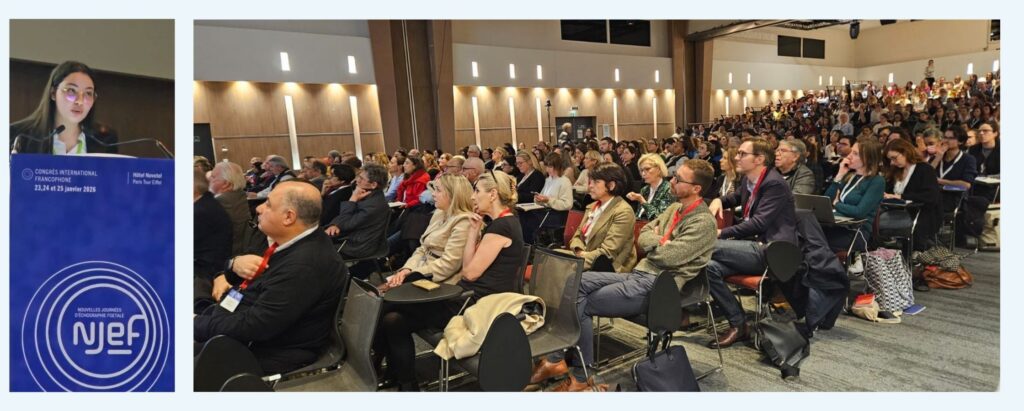
Ms. Safaa Miski, Pulsenmore EMEA – NJEF 2026
What comes next?
The shift is already happening.
The question is who will lead it.
We believe this is a moment that calls for courage to innovate, openness to rethink care pathways, and commitment to expanding access without compromising quality.
Warm regards,
The Pulsenmore Team