








No, the Clinician-Dashboard interface is an online web application that utilizes an active directory access technology (permission management tool).
Home » Resources
Resource Center
This section contains international research and may reference indications not approved in all regions. Please consult local approved indications before use.
Filter By:

- Ongoing research
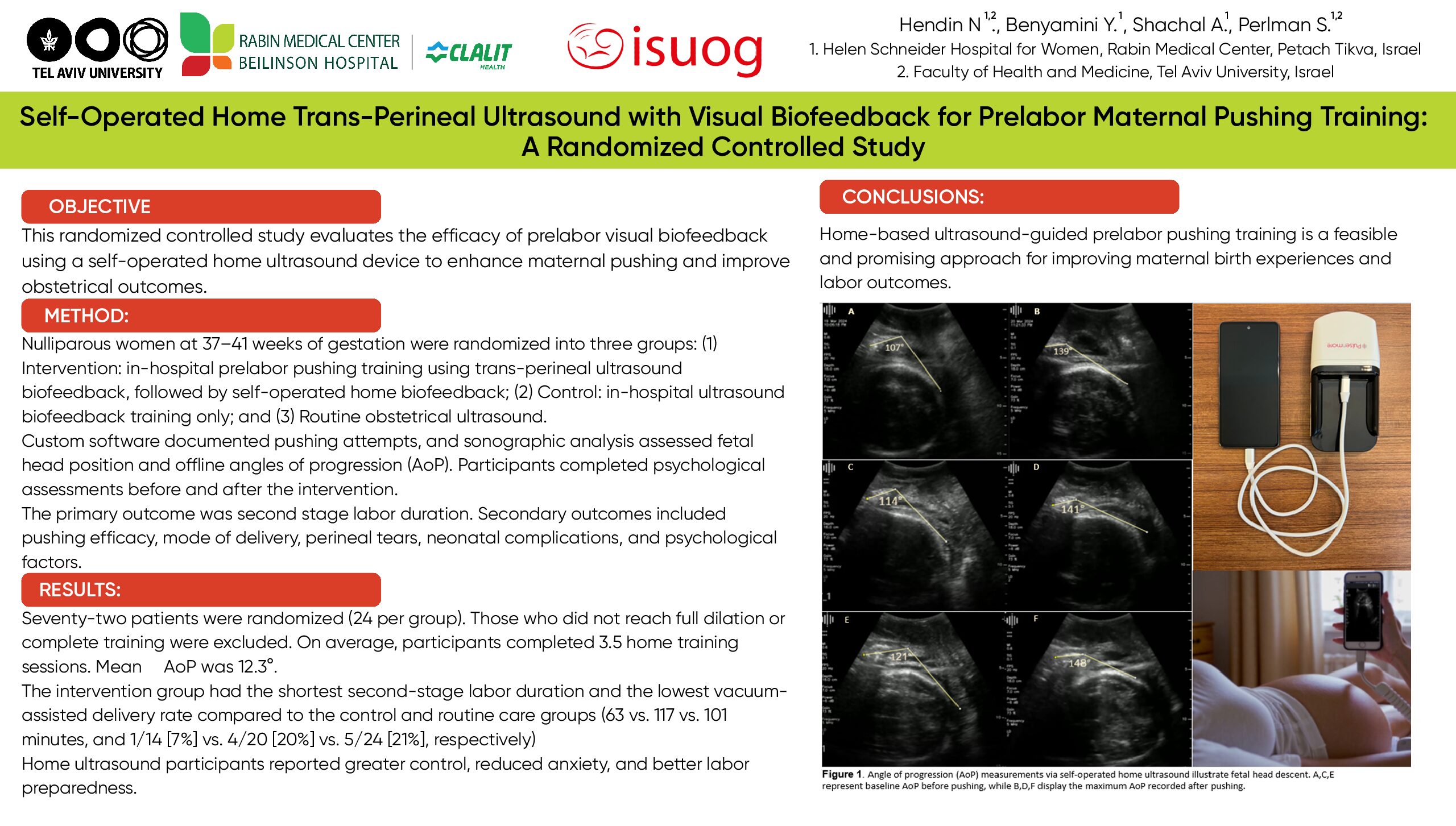
This randomized controlled study evaluates the efficacy of prelabor visual biofeedback using a self-operated home ultrasound device to enhance maternal pushing and improve obstetrical outcomes.
- Ongoing research

This approach could thus contribute to a more sustainable, resource- efficient, and barrier-free (in terms of access to healthcare) model of prenatal care, especially in regions with limited resources.
- Ongoing research

Conclusion: The Pulsenmore platform offers a safe, effective, and patient-centered solution for prenatal monitoring. Clinical evidence from three years of research and successful commercialization supports its integration into prenatal care.
- Ongoing research

HaH for High-Risk Pregnant women offers a promising alternative to prolonged hospital admissions, empowering women while maintaining quality of care. Further research is needed to explore the scalability and management
- Ongoing research
The INSTINCT ultrasound system is a viable solution for remote fetal assessment and could potentially lead to a cost and time alleviation. There is need for integration of Doppler-mode to
- Ongoing research
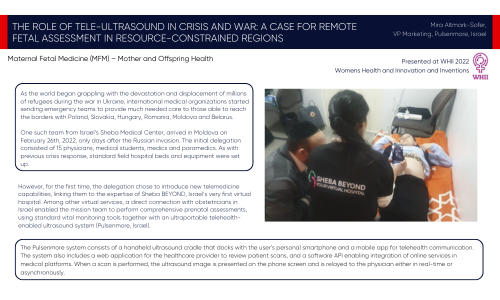
The study discussed the use of tele-ultrasound for fetal assessment in regions affected by crisis and conflict. It highlighted how remote ultrasound technology could provide crucial prenatal care in resource-limited

the news pulse
We invite you to keep up to date with the latest updates by registering to our quarterly newsletter




FAQ
Frequently asked question
Can anyone access the dashboard?
How does the patient receive her Pulsenmore Scan Key Code?
The Pulsenmore Scan Key Code is generated by the HCP or admin within the clinician dashboard interface. It has unique identifiers based on the patient de-identified ID, selected mode (Clinician-Guided or App-Guided), and prescription details (frequency and time of use).The key is automatically transformed into a QR code and shared with the patient via email or SMS.
Is the number of scans women can do limited?
The health care provider determines the maximum amount of scans that can be performed by the user. The device is limited to up to 50 scans per pregnancy.
Is the device transferable between patients?
The device is designed for a single patient use, to prevent cross contamination.
Does Pulsenmore use the data for its own purposes?
Pulsenmore utilizes service logs and technical information to improve services and enhance user experience. De-identified data is used for clinical education, training, research and development purposes only.
What data does Pulsenmore collect?
Pulsenmore collects four types of data:
• Service logs: Application usage logs, such as performance logs and errors.
• Technical information about the smartphone: Smartphone capabilities, application version, language, etc.
• Clinical information: Ultrasound clips scan time (see Privacy Statement)
• Interpreter Data: The identifiers of the clinicians that interpret the scans.me, scan measurements and last menstrual period (LMP).
Can I view the scans I make through the Pulsenmore app?
You can view the scan in real-time while following the scanning instructions in the app. After the scan, the images are sent to the doctor and cannot be reviewed again.
Can I scan without medical interpretation?
Every scan requires medical interpretation, and its important to wait until the files are fully uploaded. You are not expected to understand or interpret the ultrasound scans; follow the app’s instructions to scan, and receive a response from skilled ultrasound professionals .
Is the technology safe?
Yes. Pulsenmore is based on the same ultrasound technology used routinely in clinics. Scans are performed within established safety guidelines and reviewed by a medical professional, so you receive reliable clinical insight while maintaining the safety of both you and your baby.
Is the device reliable? How can I scan myself if I’m not a professional sonographer or obstetrician?
Yes, the device is reliable and was tested, validated and approved for use in the US, Europe, Australia, Brazil, Switzerland, the UK, Colombia and Israel. Over 200,000 successful scans have been performed since the launch of the technology. These numbers demonstrate that women can confidently scan themselves, as the diagnoisis it self is being done by a trained clinical team. The remote clinical team can accurately identify parameters related to fetal vitality, such as fetal heartbeat based on these scans.